
Seaweed: The Ocean's Green Treasure.

"Aphrodite’s Pantry" series.
Some foods arrive at our table wrapped in stories. Seaweed is one of them.
Long before the word "superfood" became a buzzword, coastal communities in Japan, Korea, Ireland, and Galicia already understood the value of these marine vegetables. The ocean cultivated them patiently, infusing them with minerals, light, and movement. Today, as we seek a way of eating that is more mindful and respectful of the planet, seaweed returns to remind us that nature has always held simple answers for nourishing us.
Incorporating seaweed into a plant-based diet isn't about following a trend. It is about opening the door to an ancient ingredient that brings flavor, balance, and a deeper connection to the sea.

Recolecta de algas marinas
A blue gift for a green kitchen
Unlike many land-based crops, seaweed grows without the need for fresh water, fertilizers, or vast tracts of land. It develops in rhythm with the tides, making it one of the most sustainable foods available.
Perhaps that is why, when we cook with it, we feel the ocean quietly entering our kitchen, bringing that fifth taste—umami—which transforms a simple dish into a nuanced culinary experience.
A small universe of varieties
Each type of seaweed has its own personality.
Nori, the most familiar variety, inevitably brings sushi to mind, though it is also delicious crumbled over pumpkin soup, a salad, or a bowl of brown rice.

Nori seaweed variety
Wakame offers a delicate texture and a mild flavor. It is the perfect companion for soups, fresh salads, and dishes featuring tofu or steamed vegetables.

Wakame seaweed variety
Kombu is a great ally for legumes. Cooking a small piece along with chickpeas or lentils not only enhances the flavor but also helps soften their texture.

Kombu seaweed variety
Sweet, with reddish hues, it surprises the palate with a subtle smoky note. When toasted for a few seconds, it takes on a pleasant crunch, making it a great substitute for more processed ingredients.

Dulse seaweed variety
And sea spaghetti, true to its name, invites you to discover new ways of preparing stir-fries and vegetable dishes with an unexpected texture.

Seaweed, variety: Sea Spaghetti
A concentrate of life
Seaweed may be small, but it is extraordinarily nutrient-dense.
It stands out for its rich mineral content—including calcium, magnesium, iron, and potassium—while also providing fiber, antioxidants, and vitamins that help maintain the body's balance.
Its iodine content deserves special mention. This mineral is essential for normal thyroid function, though it is best to consume seaweed in moderation and variety. As with so many of nature's gifts, balance remains the best recipe.
Cooking with seaweed: a simple step
We can transform our pantry into a precious treasure chest of culinary alchemy by introducing new products and habits over time.
Three recipes to get started
Wakame, avocado, and sesame salad
Rehydrate the wakame for a few minutes and mix it with avocado, cucumber, and some toasted sesame seeds. Dress with extra virgin olive oil, lemon juice, and a few drops of tamari. You can add some cherry tomatoes for a splash of color.
A fresh, light, and energizing salad.

Lentils with kombu
Add a small piece of kombu while cooking the lentils with onion, carrot, and bay leaf. Once cooked, you can either remove the seaweed or finely chop it and stir it into the stew. You can also add rice if you like.
A simple touch that transforms the dish.
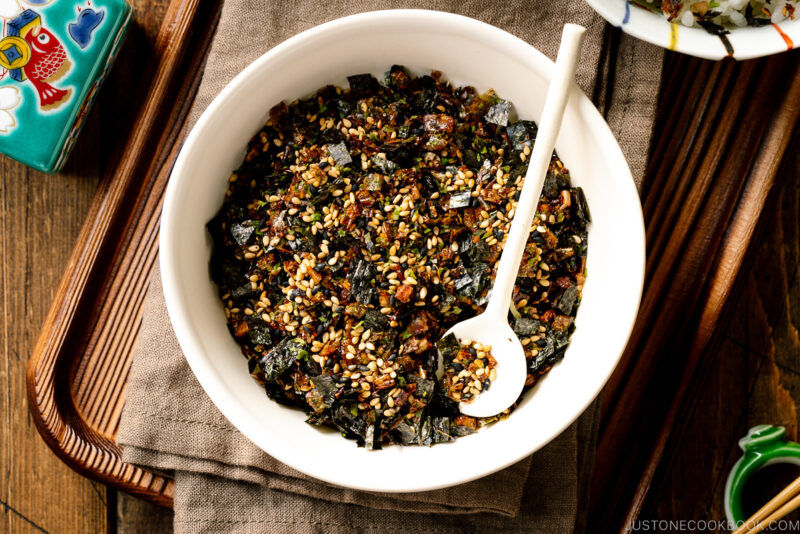
Chickpea pâté with a taste of the sea
Blend cooked chickpeas with tahini, olive oil, lemon juice, a small sheet of nori, cumin, and black pepper.
The result is a surprising plant-based pâté, perfect for serving with sourdough bread or vegetable sticks.

Eating is also a way of listening.
Mindful eating begins long before the first bite. It starts when we choose foods that respect our bodies and the animals, when we cook without haste, and when we give thanks for everything nature places within our reach.
Seaweed invites us to do precisely that.
To view the sea not merely as a landscape to behold, but as a source of life that—for centuries—has nourished those who have learned to listen to its rhythms.
Perhaps, in every sheet of nori, every strand of wakame, or every piece of kombu, there lies a small invitation to live with greater balance, simplicity, and awareness.
And that is the true magic Aphrodite wanted to keep in her pantry.

Aphrodite's Pantry – Vibrant & Magic series.


