Natural Therapies: A Professional Answer.

Updated: May 25
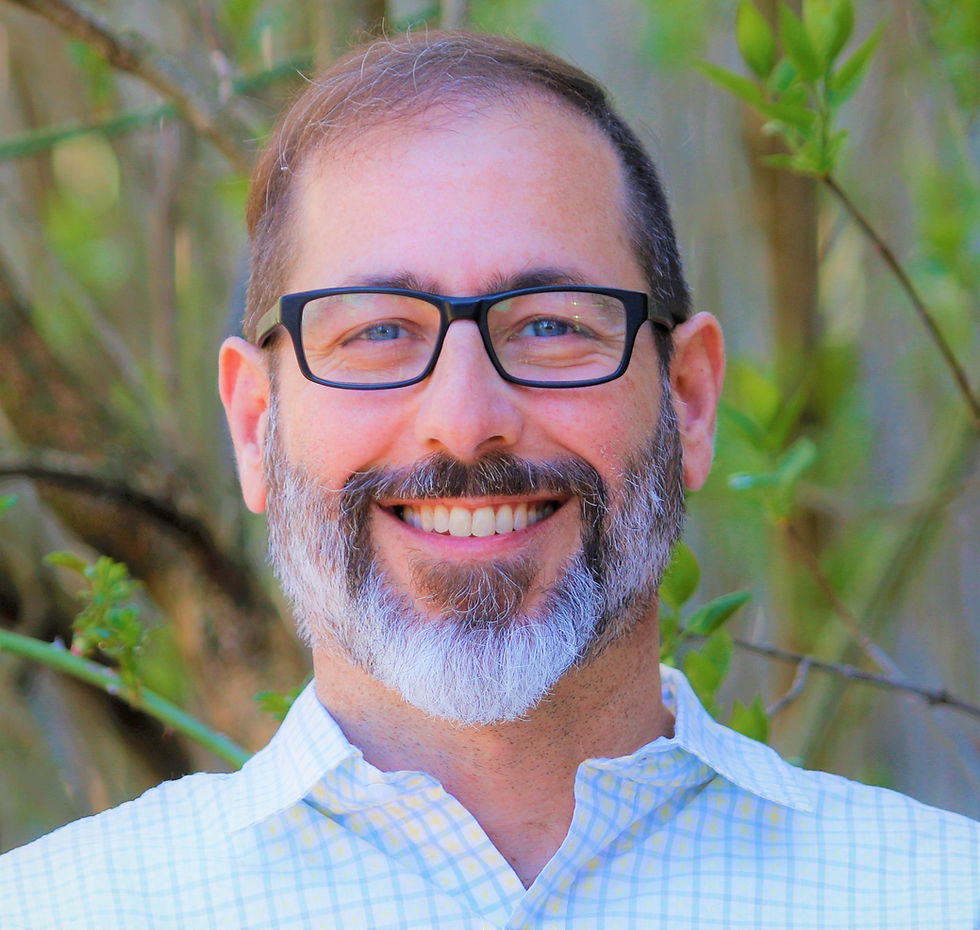
Interview with the President of the Spanish Association of Natural Therapies Professionals (ASESTENA), Moisés Cobo.
Switzerland, one of the world's most developed countries, approved the inclusion of complementary medicine in its Constitution in 2009, with the support of over 67% of Swiss voters. Since 2017, five specific therapies have been covered by mandatory basic health insurance: anthroposophic medicine, homeopathy, neural therapy, acupuncture/traditional Chinese medicine, and herbal medicine. This decision, which is clearly a step forward in regulating and facilitating access to quality natural treatments, was made possible by giving citizens the opportunity to express their opinions.
Moisés Cobo, president of ASESTENA, explains the current situation and the need for improvement in the regulation and approval of natural therapies.

Acupuncture, a highly prestigious natural therapy.
VMM. ASESTENA is an association of natural therapy professionals. I believe it has a long history. Could you tell us about its beginnings and current objectives?
ASESTENA was founded in 1991 with the firm purpose of uniting all professionals in the various natural and manual therapies practiced in Spain within the field of natural health.
Our fundamental objective is to increase membership and achieve the necessary defense and protection of the Natural Health Sector rigorously and professionally. We represent and defend the interests of professionals, without losing an ounce of passion and dedication to a task in which we firmly believe.
We know that to achieve our objectives, it is essential to work in collaboration with other organizations in the Sector, without ever losing our own legal identity, and for this reason, we maintain a sectoral agreement with the Practitioner's Register (PR) Professional Community, which belongs to the European Foundation for Traditional, Complementary and Integrative Medicine – FEMTCI.
VMM. Complementary therapies enjoy great prestige in countries like Switzerland, Germany, and the USA. What is the situation in Spain?
Indeed, there are many countries where natural medicine and therapies are fully integrated into their healthcare systems, but unfortunately, in Spain, there is no professional regulation that includes major disciplines such as Traditional Chinese Medicine, Acupuncture, Osteopathy, and Naturopathy.
We should look to the WHO's Global Strategy on Traditional Medicine 2025-2034 as a reference point. This strategy establishes a clear, yet collaborative, distinction between conventional medicine (biomedicine) and traditional and complementary medicine (TCM), which includes the disciplines mentioned above.
In Spain, these disciplines are not currently considered healthcare professions, as they are not included within Law 44/2003 on the Regulation of Healthcare Professions (LOPS). Professional development is carried out at the labor and economic level, through the CNAE-2025 code (National Classification of Economic Activities), which includes specific codes for natural health activities, and through section 841, which includes professionals in naturopathy, acupuncture, and other paramedical techniques.
VMM. In-depth knowledge of the different branches of natural therapies is important. How can we recognize a natural therapy professional with a high level of training and knowledge, versus others who, on the contrary, lack the necessary training?
The main problem is that, since it is not officially regulated in Spain, there are many professionals with many types of training and, in many cases, very low levels of quality. Therefore, the work of professional associations like ours is fundamental.
We verify that the professionals who want to join ASESTENA have quality training, since, as it is not regulated training (official healthcare qualification), the qualifications are private and highly varied.
The main problem is that, lacking official regulation in Spain, there are many practitioners with varying levels of training.
Fortunately, some Spanish universities, such as the European University of the Atlantic, now offer higher education programs in Traditional Chinese Medicine, Osteopathy, and Naturopathy, based on their own degree regulations, and are aligned with WHO benchmarks to facilitate future accreditation.
My main advice for people who want to consult a natural therapy practitioner or train in them is to first research the practitioner's qualifications and whether they are a member of a professional association like ASESTENA, as this will provide additional reassurance.
VMM. According to a report published on your website, acupuncture practitioners in Andalusia experienced some harassment from the administration, driven by a restrictive interpretation of the term. You advise taking into account a report from the Practitioner Register's Legal Department. Can you explain what this department is and how to proceed in these cases?
This isn't the first time that the national and regional governments have questioned natural therapies and their professional practice. However, the Practitioner's Register (PR), through the legal team of the European Foundation for Traditional, Complementary and Integrative Medicine (FEMTCI), is actively working to provide accurate information, since these types of reports are often issued simply due to a lack of understanding.
It is incomprehensible that many European countries have regulated different natural and manual therapies, and that these are valid there but not here. That is why any report from the PR is very valuable to us, since at the European level, FEMTCI represents us and brings us closer to the reality of what is happening outside of Spain. It is a shame that our administrations do not take into account the work already done by their European counterparts.
VMM. We were also struck by your recent endorsement and signing of the Peoples' Declaration on Traditional, Complementary and Integrative Health Care. 80% of WHO regions report using traditional and complementary medicine. This text is very interesting and clarifying: "The declaration calls for respectful collaboration between traditional, complementary and biomedical practices, to offer a holistic and person-centered approach that respects individual choices and cultural diversity, and that is part of community and planetary health." Can you explain the situation in Spain regarding this issue?
This declaration, and many others that will follow, are a consequence of the WHO's Global Strategy on Traditional Medicine 2025-2034 and the tireless work of organizations like FEMTCI, which strive for rigor, research, and the implementation of these disciplines within the healthcare systems of different countries.
Currently, countries like India and China, along with most African nations, are leading the working group for this strategy because they genuinely believe in it and recognize the benefits these methods offer their populations, always adhering to high standards of quality and professional qualifications.
What is surprising is that in Spain, those responsible for this issue do not take the WHO Strategy as a reference point, nor do they participate in signing these declarations, which contribute to a holistic and respectful healthcare system, always based on collaboration and cooperation among different healthcare professionals.

What is surprising is that in Spain, those responsible for this issue do not take the WHO Strategy as a reference, nor do they participate in the signing of these declarations, which contribute to a holistic and health-respecting system, always based on collaboration and cooperation between the different health professionals.
VMM. Personally, I firmly believe it is very important to create platforms and associations of professionals and citizens to unite and exert pressure to improve vital aspects of civic life. Could you explain your point of view on this?
I completely agree with you, and I would also add that we need more media outlets like yours, where, whether through magazines, publications, podcasts, TV, etc., professional associations can disseminate and raise awareness about the realities of the Natural Health sector.
The main objective of our association, in addition to representing professionals, is to achieve adequate regulation in Spain that will protect the end consumer. Without such regulation, there is no guarantee that the professional you consult has the appropriate training, complies with health regulations, and has Professional Liability Insurance, something that is the case in other healthcare disciplines.
You may like the professional treating you more or less, but the important thing is that they don't deceive you and always respect other healthcare professionals, who have their professional competencies defined and with whom they must collaborate.
VMM Do you have any additional information you would like to add?
I would like to conclude with one statistic, but first, I want to thank you for the opportunity you have given us to share the current situation of natural and manual therapy professionals in Spain.
The use of certain natural therapies, primarily Naturopathy, allows us to become more aware of what the WHO (World Health Organization) defines as health: “a state of complete physical, mental and social well-being and not merely the absence of disease or infirmity.”
According to the WHO Traditional Medicine Strategy 2025-2034, more than 100 million Europeans currently use Traditional and Complementary Medicine. One-fifth use it regularly, and a similar proportion prefer healthcare that includes Traditional Chinese Medicine.
So, I urge our politicians to take the WHO as a reference in this matter, just as they do in many other issues, and instead of creating confusion, dedicate themselves to working for what the population wants, because if more than 100 million Europeans use our therapies, there must be a reason.
ASESTENA : https://www.asestena.org/

Join our Conscious Circle.
Follow the interviews, articles, and podcasts.: